
Underground containers

Underground containers can be a cost-effective solution for larger multi-family residences, clusters of multi-family residences, and densely built residential areas.
Because the container holds waste underground, it takes up less space than other options.
Contact the planning officer before installing underground containers.
What are underground containers?
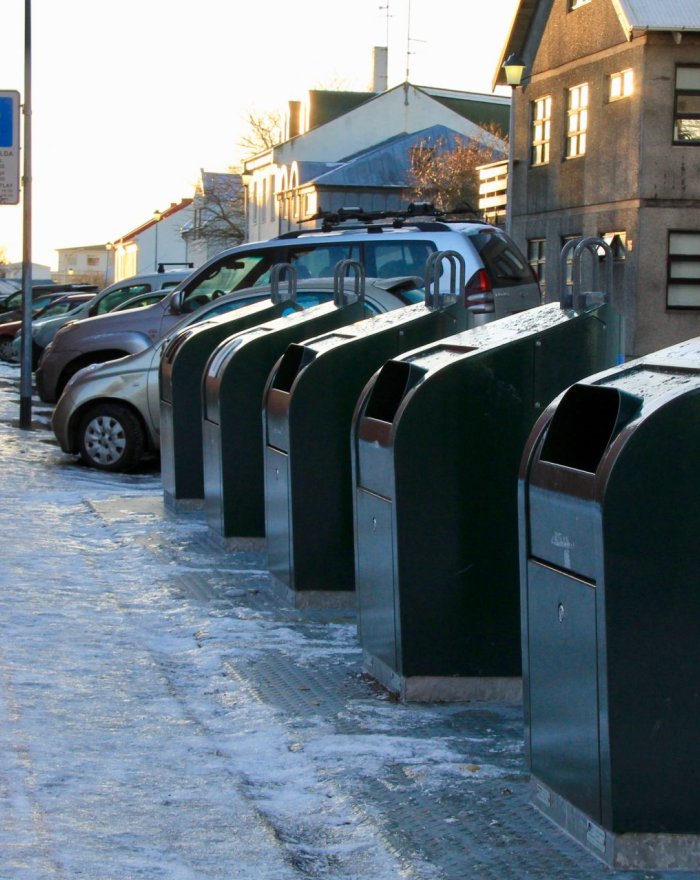
Underground containers store waste in a below-ground compartment. They are especially well suited for areas with high urban density and for larger multi-family residences or clusters of multi-family residences.
The aboveground section of each container can vary in circumference and height. This section includes an opening where residents deposit waste and a hatch for emptying the container.
What to consider when sizing underground containers
The type of waste each container accepts may change over time. Select openings suitable for more than one type of waste. Partially buried plastic containers will not be approved.
The lot holder must ensure that the containers can hold all waste generated on the premises. When deciding on the number and size of containers to install, allocate enough space for all of them, as adding more later may be difficult. If containers overflow, litter may accumulate around them.
Location and number of underground containers
Underground containers must be grouped together on the building's lot. All containers must be equally accessible, though accessibility may be further improved for recycling containers.
The number of containers and their exact location depend on the number of residential units. As a rule, containers must be located no more than 75 meters from the building entrance.
In established neighborhoods, container access for residents and collection trucks may need to be planned in advance.
In exceptional cases, underground containers may be placed on an auxiliary lot connected to the property's lot. This requires a specific justification demonstrating that the containers cannot fit on the property's lot. Both lots must have the same owner.
The Reykjavík City Office of Environmental Quality must approve the final container type, location, and access for emptying.
Costs and responsibility for maintaining underground containers
The lot holder is responsible for purchasing and operating the containers, completing related construction, finishing the surrounding area, and covering all associated costs. This includes housings, containers, hatches, and other related equipment.
The lot holder is also responsible for maintaining the containers and equipment and keeping the area clean and orderly. Hatches and safety platforms must be cleaned, and water must be drained from the containers' concrete housings.
Reykjavík City may refuse to empty the containers if cleanliness or upkeep is inadequate. If the lot holder fails to comply with a request to clean the area, the City may arrange for cleaning at the lot holder's expense.
Contact us
Suggestions related to Reykjavík Waste Collection Department services can be submitted through Reykjavík City's Suggestion Portal.
Reykjavík City's service center can be reached at 411-1111.
Email: info@reykjavik.is
